
Evan
August 10, 2026
As a Jacksonville pool owner, you’ve no doubt learned the hard way that the weather can change dramatically from one day to the next.
Your pool can look beautiful on a cloudless morning, but by afternoon, the clouds roll in and the wind picks up. The leaves begin to fall, and the Florida rain showers down as if it had been waiting for weeks.
When the storm passes, your pool may well look fine, but it’s unlikely to look the same.
The water level may well be up; there may be leaves floating on the surface; there may be dirt in the steps; and the water may be a little cloudy in the morning.
In a few days, it may turn green and ruin your plans for a lovely swim.
Most homeowners who own a swimming pool know that rain is clean water coming down from the sky.
If only that were the case.
Rainfall can dilute chlorine, affect pH, reduce or deplete alkalinity, introduce debris, increase organics, and encourage algae blooms.
That doesn’t mean every shower of rain will ruin your pool’s chemistry.
It simply means that you must test your pool after inclement weather to determine what, if anything, needs to be done.
A swimming pool is much more than H₂O flowing over your backyard.
It’s a balanced swimming pool that has been properly maintained.
That means chlorine, pH, alkalinity, calcium, stabilizer, circulation, filtration, and the overall state of the swimming pool surface.
Heavy rainfall will add not just water to the pool but dilution to the existing sanitizing agents in the water.
Rain can also bring a host of unwanted debris such as leaves, dirt, pollen, mulch, fertilizer, grass clippings, insects, and other unwelcome items that will require attention.
That’s why your pool can look great before the storm and feel completely different afterward.
The CDC instructs that chlorine and pH levels should be checked regularly to ensure the water is safe. You may want to go to CDC’s website on home pool and hot tub water treatment and testing for more information.
Testing and treating the pool are essential after heavy Jacksonville rainfalls.
Chlorine is frequently one of the first items to consider when testing a swimming pool after heavy rainfall.
It’s the sanitizer in the water, and heavy rains can dilute the levels.
Furthermore, the newly added water in the pool contains additional matter for the chlorine to break down and remove.
This means that you have less sanitizer in the water than you believe, and the sanitizer has more work to do.
It only takes a few days for the chlorine to deplete, and the water to turn cloudy, and for the algae to bloom around your pool.
In Jacksonville’s warm climate, that can happen in a matter of days.
That is why regular maintenance calls to local pool companies in Jacksonville, such as All County Pool Services, are so critical. The objective is to stay ahead of the algae rather than play catch-up when the entire swimming pool turns green.
The pH indicates how acidic or alkaline the water is, and it’s yet another element that is frequently impacted by inclement weather.
It’s not uncommon for rain to affect pH levels; however, the degree to which it does so varies.
In other words, there is no rule of thumb when it comes to rainfall and pH.
The amount of rainfall, existing water balance, the amount of debris, aeration, and other variables will all play a role.
That’s why testing is necessary.
If the pH is low, the water is too acidic and will corrode metals, erode the plaster, and leave the pool’s surface and equipment vulnerable.
High pH, on the other hand, renders the water difficult to treat, lowers the efficiency of the chlorine, and encourages the formation of scale.
Testing is the only way to know for sure, and testing won’t be effective if you’re adding unneeded chemicals.
Alkalinity is frequently affected when heavy rainfall occurs.
Alkalinity is critical to the swimming pool’s water balance because it helps to regulate pH in the water.
As mentioned earlier, heavy rainfall frequently leads to a decrease in chlorine levels in the pool.
If the level of alkalinity in the water is low, the pH will be erratic and unable to function correctly.
Many pool owners are baffled when their pool’s chemistry appears to be in order, only to find that a new storm has wreaked havoc with the pH and, by extension, the chlorine levels in the water.
This is especially common in the context of the state’s frequently inclement weather.
That’s why testing and treating the pool after each significant storm is so important.
It’s essential to understand that testing just the chlorine isn’t enough to keep the water in good health.
While chlorine levels are undoubtedly critical, so too are alkalinity and pH.
Sometimes the rain isn’t the problem; rather, the wind that frequently accompanies it is.
The wind carries leaves into the pool, blows pollen from the trees into the water, drags mulch and other landscape items into the pool, and causes a myriad of other issues.
It’s not uncommon for the pool to fill with unwanted material when the storm hits the area.
All of this undesirable flotsam and jetsam add to the number of things the chlorine in your pool has to break down and eliminate.
The debris can clog the skimmer and the baskets, as well as discolor the water and encourage the growth of algae.
The EPA has published a comprehensive article on stormwater and its effects on water pollution, including the impact on the environment, residential structures, and commercial structures.
While you may not be able to prevent every storm from affecting your swimming pool, you may take steps to lessen the damage.
It’s crucial to examine the water in the pool after the storm has passed.
Even if the water looks fine, it’s critical to remove the leaves and other debris that have made their way into the pool during the storm.
You may want to double-check the baskets because they might have gotten clogged as well.
The filter is another element that should be inspected after a storm because it can get clogged and stop working correctly.
It’s crucial to remember that your pool is not designed to operate as a city sewer system.
As such, it’s recommended that you clean it regularly.
It’s entirely normal for the water in your pool to be somewhat cloudy after a storm.
There are several reasons for this, including a reduction in the amount of chlorine in the water, an increase in the amount of fine particulate matter in the water, an inability of the filter to remove the particulate matter, or even a change in the pH of the pool water or the development of algae.
In other words, a combination of causes, or just one of them, might be responsible.
Regardless of the reason, it all boils down to the fact that the cloudiness is unpleasant and inconvenient.
It’s important to understand that the water in the pool isn’t the only thing that can cause it to appear murky and cloudy.
The lack of proper circulation can contribute to the problem as well.
When it comes to water clarity, it’s critical to understand the relationship between chemistry and circulation.
When one is out of whack, the other is affected.
Algae love warm weather, and they’ll quickly take advantage of a drop in sanitizing agents in the water to begin invading the pool.
That frequently happens after periods of heavy rainfall that deplete chlorine levels and cause leaves to fall into the pool, obstructing the circulation and providing food for algae spores.
Algae spores can soon be seen as green smears around the pool’s walls or as slimy deposits on the steps and floor.
Sometimes it looks like dirt on the pool floor, but it’s more likely to turn into a thick, green cloud when you use a brush to remove it.
The easiest way to deal with algae is to remove it as soon as you notice it, so that only a few spots are affected rather than the entire pool.
After a rainfall, you should clean the pool, remove the leaves, test the water, and make sure the equipment is operating properly. If the algae keeps coming back after every storm, there may be something wrong with your pool that needs to be addressed.
All County Pool Services is a trusted provider of pool repair in Jacksonville for local residents with issues with their equipment, surfaces, and other pool components that can contribute to unbalanced water.
After a big storm, the water in the pool may rise.
It’s normal, if annoying, and the water level may return to normal after a day or two.
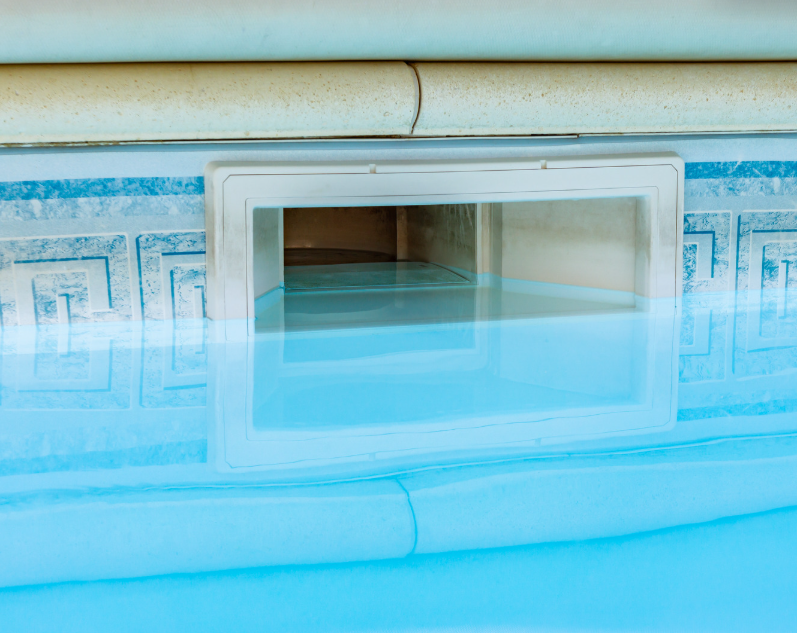
The primary concern with high water levels is that they can affect the skimmer’s ability to remove leaves and debris from the pool.
When the water level in the pool is too high, the skimmer can’t reach the leaves and pollen as efficiently, so they tend to float on the surface of the water for a while before being skimmed.
That can cause the debris to accumulate on the bottom and sides of the pool, requiring additional cleaning and brushing to remove it.
If the pool is large, the water may spill over the edge and onto the surrounding deck and foliage.
It’s critical not to drain a considerable amount of water from the pool unless you’re particularly familiar with the mechanics of the pool and the equipment.
If you’re unsure about the most secure and effective way to reduce the water level in your swimming pool, you should contact a professional.
After a storm, take a look around the pool.
Is there muddy water running toward your swimming pool?
Is there a steady stream of mulch flowing toward the pool?
Do leaves always seem to congregate in the same area of the pool?
Is one side of the pool consistently dirtier than the other after a storm?
Does water seem to be running from the roof or deck into the pool?
Those are all issues worth investigating because they can have a considerable impact on the maintenance of your swimming pool.
It’s essential to keep in mind that your swimming pool will only require minimal maintenance if the deck, coping, drainage, or patio is level and has a slight slope away from the pool.
If it’s old or has poor drainage, it can lead to a myriad of other issues.
In some situations, a pool remodeling project can help.
As a rule of thumb, newly plastered pools are smoother and easier to clean than older ones with pitted or rough surfaces.
Pitted and rough surfaces tend to hold more dirt and are generally more challenging to clean after a storm.
That’s when many pool owners feel as if their pool is never quite the same after a storm: they clean it, brush it, and test the water, but there are always a few particularly dirty spots that need extra attention.
There may be a problem with the surface if they continue to occur after all of the appropriate maintenance measures have been taken.
All County Pool Services provides pool resurfacing in Jacksonville for homeowners looking to get rid of rough, pitted surfaces or other issues that cause their pools to look dirty after a storm.
It’s important to note that resurfacing won’t solve all of the problems, but it will undoubtedly make the maintenance process easier.
When your pool has been heavily rained on, the following steps should be taken:
First, double-check that the water level in the pool is appropriate.
If it’s too high, the skimmer may not function correctly.
Next, remove the leaves and other unwanted items from the water.
Remove the leaves and other unwanted items from the water. Check the skimmer baskets and pump basket to ensure that they aren’t clogged with debris. If they are, empty them.
Then, brush the steps, benches, walls, and floor of the pool to remove as much dirt and algae as possible so that the water can remove it.
Finally, conduct a few tests. At the very least, you should check the chlorine and pH levels of the water. After several storms, it’s a good idea to double-check alkalinity.
Make sure the filtration system is running, but if you hear anything unusual, don’t ignore it.
The pump may be losing suction or pulling in air somewhere, or it may have lost prime entirely.
Avoid adding chemicals to the water without testing them.
Assuming that clear water means balanced water is a bad idea.
Swimming pools with cloudy or questionable water should not be used.
Avoid leaving leaves in the pool for days or weeks at a time.
Do not disregard the pump’s odd noises following a storm.
And, most crucially, if you continue to have the same issues, do not continue to treat the symptoms rather than the underlying cause.
Commercial and residential swimming pools are governed by different rules.
Commercial swimming pools have more stringent requirements regarding testing, safety, and maintenance.
The Florida Department of Health has published a comprehensive guide to public swimming pools, including information on water quality for commercial swimming pools.
If a hotel, apartment complex, or other commercial establishment suffers storm damage to a public swimming pool, it must follow the relevant rules and regulations before reopening the pool to the public.
As a residential pool owner, the most important thing to remember is that you shouldn’t assume that just because your swimming pool looks nice from the patio, it’s safe and balanced for swimming.
Testing is always a good idea, especially after a storm.
If your pool has been raining heavily, you may find that some problems are simple to spot and remedy.
However, there may well be other issues lurking beneath the surface that aren’t so obvious.
Call All County Pool Services if your pool is always turning cloudy after a storm, or if it’s turning green quickly, or if it’s becoming hard to balance or keep clean, or if the circulation seems to be sluggish, or if the filter seems to be malfunctioning, or if there are persistent stains that don’t seem to go away, or if the water level is rising or falling abnormally.
If your pool has been losing water at an abnormal rate, a pool repair inspection can help determine whether the issue is related to the skimmer, plumbing, fittings, equipment, cracks, or another factor.
Yes, because heavy rains can dilute chlorine and upset water balance. It’s important to check the pool’s chemistry to see if any adjustments are needed.
Yes; it can promote algae growth. Rainfall can dilute sanitizing agents and introduce a plethora of undesirable materials into the water. In addition, algae spores can flourish in warmer weather.
Not necessarily; rain can affect pH, but the extent to which it does so is determined by a number of variables.
It’s not recommended that you do so because some pools only require maintenance, cleaning, and occasional chemical adjustments.
It can be caused by diluted sanitizer, fine particulate matter in the water, inadequate filtration, pH imbalance, or algae infestation.
Heavy rains typically do not damage the pool’s surface.
However, a lack of balance can cause staining, as can a rough surface holding on to undesirable substances. Older plaster tends to become pitted, making it more challenging to maintain.
Heavy rainfall is an inevitable part of life for anyone who owns a swimming pool in Jacksonville.
While you can’t avoid or control every storm, you can do your part to make sure your pool doesn’t run away with you after the rain stops.
After a storm, you’ll want to clean up any debris, check the water level, test the water chemistry, brush the pool, and make sure the equipment is working properly. It’s also a good idea to limit your chemical use to what’s absolutely necessary.
If your pool is always turning cloudy, green, or stained after a storm, there’s likely something wrong that goes beyond normal maintenance.
All County Pool Services can help.
We offer a wide range of pool services, including maintenance, repair, resurfacing, and remodeling, to residents of Jacksonville, Jacksonville Beach, Ponte Vedra Beach, Fernandina Beach, Orange Park, and the surrounding areas.
Contact us at the All County Pool Services contact page to schedule an estimate and keep your pool in good working order after the next storm.